Cast: Izumi Aoyagi, Mari Ando, Yuri Itabashi, Takuya Harada, Makoto Yazawa, Yo Yoshida, Leon Kou Yonekawa
This Poster for Eraser Mountain seems to have nothing to do with the show...
Toshiki Okada is a Japanese playwright, theater director, novelist, and founder of the theatrical company chelfitsch. He is known for "his use of hyper-colloquial Japanese and his unique choreography."
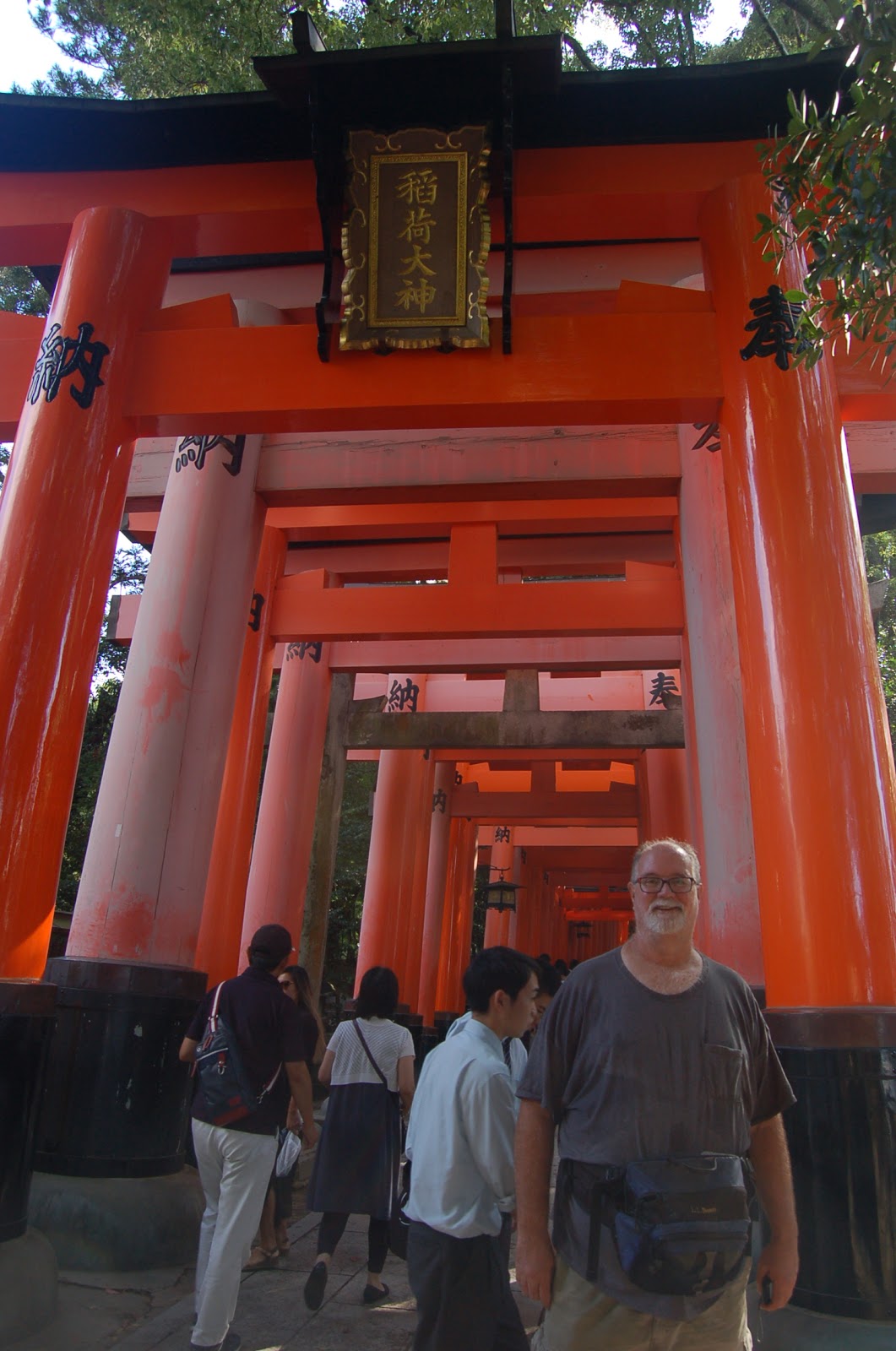
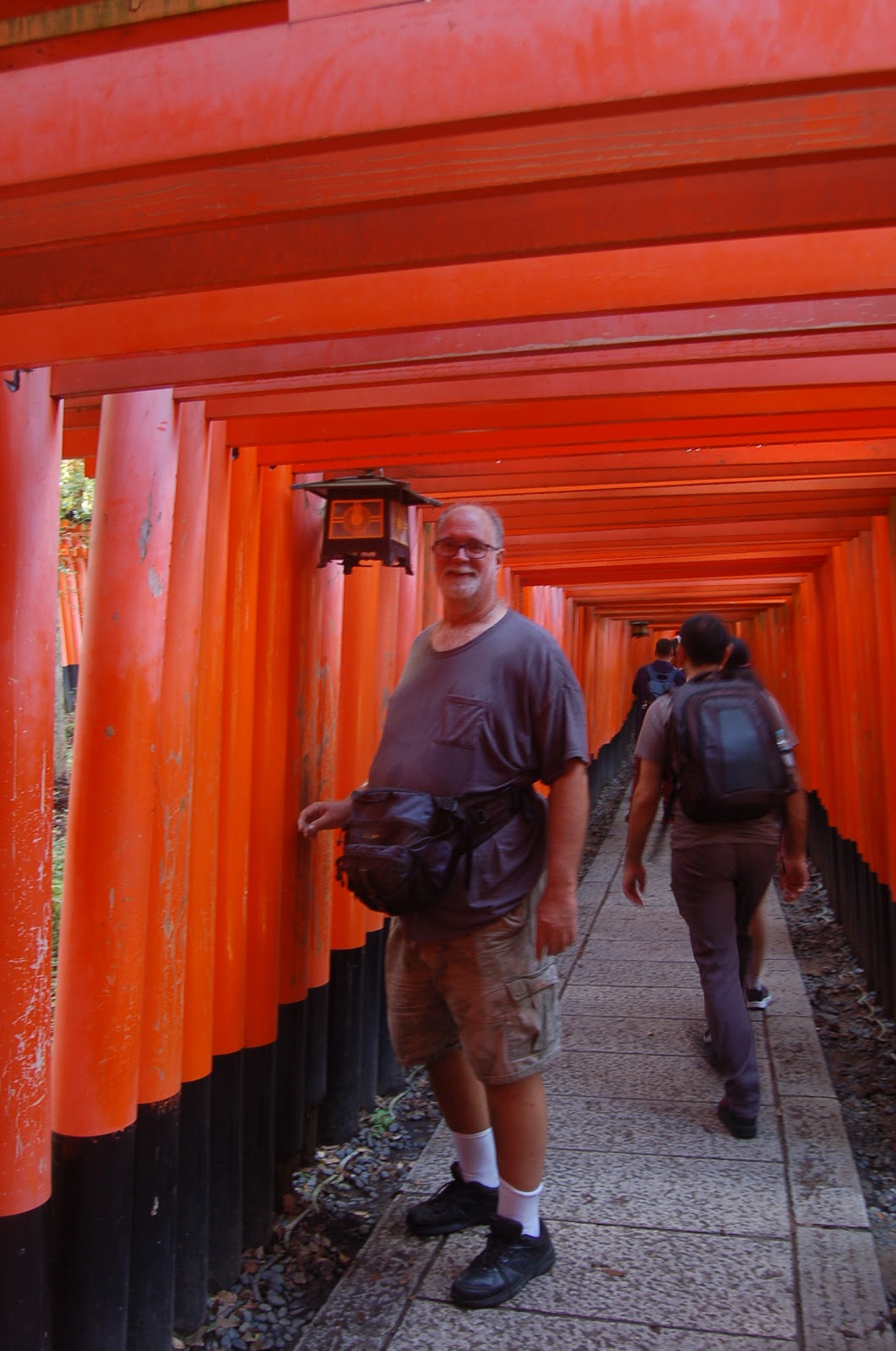
After breakfast, we walked to the train to Fushimi Inari Shrine and Fukakusa Yabunouchicho
This is a Goshuin. Most Temples and Shrines, issue a Goshuin, this red stamp document. They are collected in a Goshuincho, translated as "Honorable Stamp/Seal Book." The basics are that they historically proof of attendance at a temple or shrine. The calligraphy is the date, the name of the shrine or temple, the words "奉拝 (houhai)" (which means to worship), and a stamp with the name of the shrine. The full story and an explanation of the seal's origins and collections can be found here. I collected several in my Honorable Book. Our friend Yuko added the post-a-notes so I would remember where they came from. The stamps were 300 yen each, and most are done while you wait and watch. Some sites had one calligrapher; the most I saw was six at one Temple.
An excellent reference for the manners expected at a shrine can be found here.
Young men on a school trip, performing the ritual cleansing before entering the temple
Fushimi Inari is the most important of several thousands of shrines dedicated to Inari, the Shinto god of rice. Foxes are thought to be Inari's messengers, resulting in many fox statues across the shrine grounds. Fushimi Inari Shrine has ancient origins, predating the capital's move to Kyoto in 794.
The foxes have various things in their mouths.
Flanking the entrance to temples. there are two figures associated with the temple. One will always have the mouth open and one the mouth closed.
This complex is known for its foxes
Then we took the train to the hotel and changed to walk to the
This show is called many things, and the best single descriptive word is "immersive." Based on a 70-page section of the very long "War and Peace," the show is able to tell a complete story.
Next, let me say that my first, and lasting, impression of any show is my ability to hear and understand the words. If you think you might have a problem, GET THE LISTENING DEVICES! At least, listen and understand the Prologue here.
The facts are: There are more than 30 chorus and principles singing all over the theatre, and an orchestra in six locations, a number designed as a raucous drinking song. Very difficult to understand the clever and informative lyrics. That said, you can view the Tony Award performance below:
As you might get the idea, the show takes place on all levels of the theatre. The house walls are draped and decorated with period paintings, several seats in the house have been replaced with small tables with lamps.
The show is very entertaining, and even missing the Prologue's vital information the storyline is easy to follow. The performances are all excellent.
Learn more about the making of this show with this video.